

Fencing in Nocatee: Village ARB Rules and How to Avoid a Rejected Application
A Crosswater homeowner brings home an eight-week-old golden retriever, prices a 4-foot aluminum fence for the backyard, and books the install for the following Saturday. Ten days later the village’s Architectural Review Board (ARB) sends the application back: the plotted fence line crosses a platted drainage easement, and the package didn’t include the manufacturer’s color code. The install date is gone, and the puppy still can’t run around and play.
That story repeats across Nocatee because every fence needs written ARB approval before the work starts, and the rules differ from one village to the next. Approved materials, colors, heights, and fence locations in Twenty Mile aren’t identical to those in Crosswater, Cypress Trails, or Del Webb. Homeowners who get approved on the first submission almost always did two things: pulled their own village’s manual instead of relying on general Nocatee guidance, and submitted a complete package.
This guide covers how the review process works, the rules that repeat across Nocatee’s village manuals, the mistakes that trigger rejections, and what a complete submission looks like.
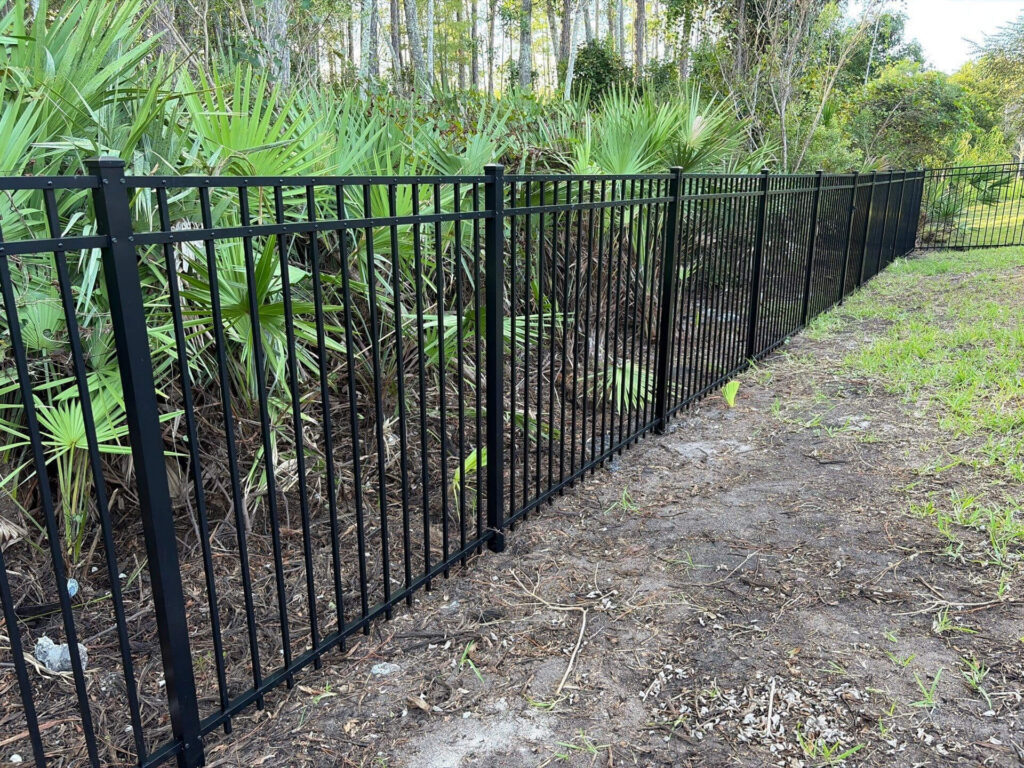
Why fence rules in Nocatee vary by village
Nocatee is a master-planned community in Ponte Vedra developed by The PARC Group, and it describes itself as one of the best-selling master-planned communities in America. It’s organized into dozens of distinct villages and neighborhoods, and each one runs its own architectural review under its own manual. Some call the reviewing body an ARB, others an ARC (Architectural Review Committee); the function is the same.
That structure has a practical consequence: the document that governs your fence is your neighborhood’s manual, filed under your village’s HOA, and it can differ meaningfully from your friend’s rules three streets over in a different village. The Crosswater ARB manual, the Twenty Mile manuals, and the Del Webb architectural criteria are all separate documents. Del Webb’s manual goes as far as publishing dedicated exhibits for approved fence materials, specifications, and approved fence locations.
Before you price materials or commit to a design, download your village’s current manual and read the fencing section. Everything downstream depends on it.
Which fence rules repeat across Nocatee villages?
While the details vary, several rules appear nearly word for word across multiple Nocatee village manuals. These are the safest assumptions to start from:
Rule | What it means for your project |
|---|---|
Prior written approval | Fence location, height, composition, and color must be submitted and approved before installation |
Side yard consistency | Side yard fencing must match the approved rear yard fence type |
Front-of-house limit | Fencing can’t extend closer to the front of the house than the midpoint of the sidewall plane |
Easement prohibition | No fences within areas labeled “Unobstructed Drainage, Access, and Maintenance Easement” on the recorded plat |
Survey-based siting | Your fence line must be plotted on a survey or site plan as part of the submission |
Individual villages add their own restrictions on top. River Landing’s manual, for example, prohibits fences used to create a dog run and encourages invisible fencing as an alternative to perimeter fencing. Rules like that are exactly why the village-specific document matters more than any general summary, including this one.
Why do fence submissions get rejected in Nocatee?
Most rejections trace back to a handful of predictable problems, and nearly all of them are avoidable with preparation.
Unapproved material, style, or color leads the list. If your village publishes an approved fence materials exhibit and your product isn’t on it, the quality of your site plan won’t save the application. The same goes for color: submit the specific manufacturer color name or code, and confirm it’s permitted before you fall in love with it.
Location errors come next. A fence drawn inside a platted drainage or maintenance easement, or one that runs past the midpoint of the home’s sidewall toward the street, conflicts with the written standards in multiple village manuals. Corner lots deserve extra care here, since a stretch of fence you think of as “back yard” may be treated as side or front yard under the manual’s definitions.
An incomplete package costs homeowners the most time. Cypress Trails, to take one documented example, requires the survey to be marked with the plotted fence location, and the committee’s review clock starts when the package is complete. Missing a survey, a spec sheet, or a required signature can stall the whole application.
One more location note: your fence should sit on your property, verified against a recent survey. If your survey is years old, order an update before you submit. An encroachment dispute with a neighbor is far more expensive than a survey.
What goes in a complete ARB submission package
A first-pass approval usually comes down to a complete, specific package. For most Nocatee villages, that means:
The ARB or ARC application form from your village’s HOA portal
A survey or scaled site plan showing property lines, the house footprint, easements, and the plotted fence line
Material specifications: manufacturer, product name, style or profile, height, and color code
A photo or manufacturer rendering of the exact fence style
Gate locations and hardware details
Neighbor notification or signatures, where your village requires them
Keep a dated copy of everything you submit. Review windows vary by village; the Cypress Trails manual, for instance, states the committee will act within 30 working days of receiving a complete package. Treat any published window as the outer bound for planning purposes, and never schedule installation before written approval arrives.
If your fence will enclose a pool, it also has to satisfy Florida’s residential pool barrier requirements, including a barrier at least 4 feet high and self-closing, self-latching gates consistent with IRC Appendix G. That’s a safety obligation that applies regardless of what the ARB approves.
ARB approval and the county permit are separate steps
Approval from your village’s ARB does not cover you with St. Johns County. Fence work in the county typically requires its own permit, and the ARB manuals themselves state that compliance with building codes and governmental ordinances remains the owner’s responsibility. Your contractor should confirm the permit requirements for your specific project and pull the permit where applicable, along with scheduling utility locates through 811 before any posts are driven.
How Fortera handles this for Nocatee homeowners
A contractor who has never worked inside a Nocatee village review can design a good-looking fence that fails on paper. Fortera Fencing was founded by a Northeast Florida native with deep familiarity with local permitting, HOA, and architectural review processes, and every project starts with an itemized free estimate with clear scope, delivered on-site after a property walkthrough.
The build itself follows The Fortera Installation Difference. Instead of dug-and-concreted footings, iDrive steel or aluminum posts are driven 48 inches or deeper into undisturbed soil. No concrete, no dirt disposal, minimal disturbance to your landscaping. The finished fence is wind-certified to 100 mph and backed by a three-part written warranty. In a community where the ARB cares how your yard looks during construction as much as after, a cleaner installation matters.
The paperwork side runs through The Fortera Fencing Process: utility locates are handled during pre-installation, permit pulling is handled where applicable, and a designated client manager stays with your project from first call to final walkthrough. Aluminum fencing and heavy-duty vinyl fencing with panels up to .27 wall thickness cover the categories most planned-community review boards favor, and mixed material fencing offers a wood look carried on aluminum posts and rails for villages where a standard wood build won’t pass.
Common questions about Nocatee fence approval
How long does ARB review take in Nocatee? It depends on your village. Cypress Trails publishes a 30-working-day window that starts once the package is complete, and other villages set their own timelines in their manuals. Build the review period into your project schedule rather than assuming a quick turnaround.
Can I build my fence right on the property line? Check your village manual and your plat first. Fences are prohibited inside platted drainage, access, and maintenance easements across multiple Nocatee villages, and a recent survey is the only reliable way to know where your line and easements sit.
Do I still need a county permit after HOA approval? Yes. ARB approval and the St. Johns County permit are independent requirements, and the village manuals put code compliance on the homeowner. A licensed contractor should handle the permit as part of the project scope.
What happens if I install a fence without approval? Village manuals require written approval before installation, and an unapproved fence is subject to enforcement, including modification or removal at your expense. What a specific board orders may vary case by case, but the review takes weeks and tearing out a finished fence costs far more.
Get the village manual first, then get the estimate
The path to a first-pass approval in Nocatee is well worn: download your village’s current ARB manual, verify your survey, choose a listed material and color, and submit a complete package with the fence line plotted. Thousands of Nocatee homeowners have done it before you.
When you’re ready to price the project, schedule a free, no-obligation on-site estimate with Fortera Fencing. We’ll walk your property, take measurements, and help you choose materials and layout, and you’ll get a free estimate on-site with no deposit required to book.
Premium Fencing. Superior Experience.
Call to Schedule Your Free Estimate Now
Get started today with a free estimate and experience the professional, easy, and dependable service that sets Fortera Fencing apart.