Open: 8AM – 8PM | Mon-Fri
The second contractor pulled out of your driveway an hour ago, and his screwdriver is still in the grass where he probed your posts.
Now you’re at the kitchen table with two quotes for the same 150 feet of 14-year-old pine: $400 to patch the broken panels, or $6,000 to tear the whole thing out and start over.
The decision comes down to five checks. Repair a fence when the damage is confined to pickets, panels, or a small number of posts and the structure holding everything up is still sound.
Replace it when posts are rotting at or below the soil line, more than half the sections have problems, or the fence has reached the end of its expected lifespan for its material.
All five checks take under an hour with a screwdriver, and they’ll show you which quote fits the fence you actually have. Run them before the third contractor walks your property.
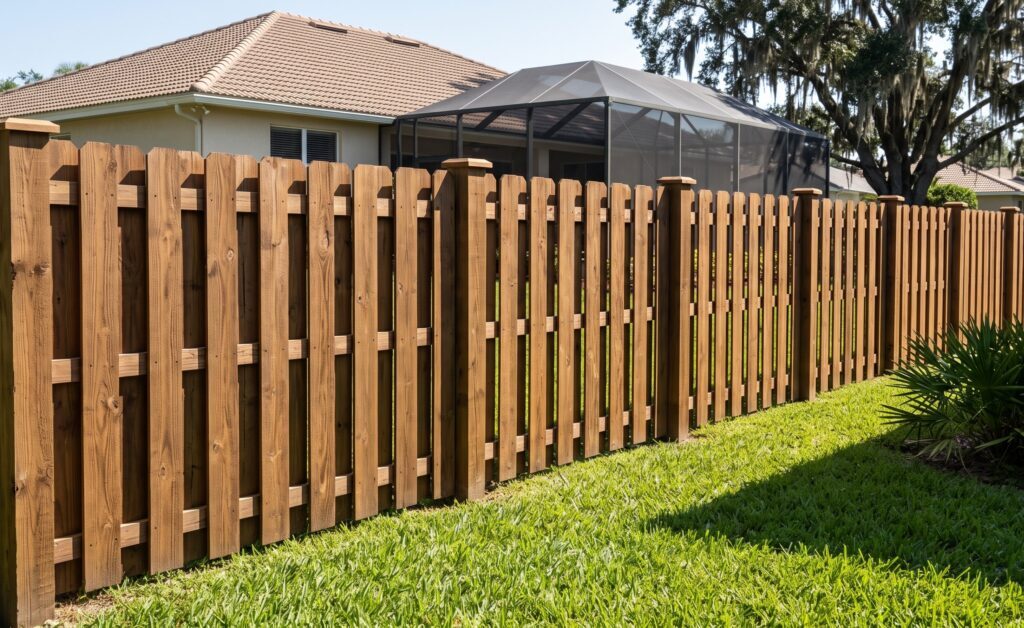
Walk the full fence line and tally sections with broken boards, sagging rails, leaning posts, or visible rot, then divide by the total number of sections. The percentage sorts most fences cleanly:
Share of sections damaged | The sensible move |
|---|---|
Under 25%, posts solid | Repair. Isolated damage on a sound structure is worth fixing. |
25% to 50% | Get both quotes. If the repair bid runs past half the replacement bid, replace. |
Over 50% | Replace. At this point you’re rebuilding the fence one expensive piece at a time. |
That half-the-cost threshold is the rule of thumb good contractors use internally. Widespread damage usually means the whole fence is aging out together, and the sections you patch this year will be joined by new failures next year.
A repair only makes sense if the rest of your fence has enough life left to justify it. Northeast Florida’s humidity and rain are hard on everything at and below the ground line, and these are the working lifespans we see here:
Material | Typical lifespan here |
|---|---|
Pressure-treated pine | 10 to 15 years |
Cedar | 15 to 20 years |
Vinyl | 20 to 30 years |
Aluminum | 30+ years |
Galvanized chain link | 15 to 20 years |
Find your material in the table and set your fence’s age against the range. Damage in the first half of that lifespan is almost always worth repairing. Once your fence passes roughly three-quarters of its expected life, every repair dollar you spend buys a short extension on a structure that’s wearing out all at once. If your pine fence is 14 years old and the posts are failing the probe test, it’s right on schedule, and the replacement quote in your hand deserves the harder look.
A fence that was sound before a storm and broken after it is usually repairable, and possibly insurable. Wind snaps panels and rails at random points; age rots posts everywhere at once. If the damage traces to one event and the posts pass the probe test, fix the broken sections and keep the fence.
Insurance follows the same distinction. Homeowners policies cover sudden storm damage under other structures coverage, and they exclude wear and tear, which means a fence that was already rotting when the wind took it down often gets denied. Hurricane deductibles in Florida are usually a percentage of your dwelling coverage, so smaller repairs may never clear the deductible anyway. Our guide to fence storm damage insurance in Florida walks through deductibles and policy types in detail.
The lowest repair bid on an aging fence usually reuses the existing posts, and that’s where homeowners pay twice. Picture a 15-year-old pine fence where a storm took out six panels. The posts pass a casual glance, so the low bid hangs new panels on them. The posts are the same age as everything else, and in two or three years they fail the probe test. Now you’re paying labor a second time, and the nearly new panels often don’t survive being pulled off and rehung.
The rule: a repair should last as long as the structure it attaches to. If the posts have five good years left, don’t bolt 15-year panels to them without pricing what post replacement would add. Sometimes the right repair is new posts and reused panels, which is the opposite of what the low bid proposes.
That math shifts depending on how the post was set in the first place. A post embedded in concrete needs that footing broken out and hauled away before a new one goes in, and the demolition is most of the labor. What a written repair estimate should include
Hold a repair quote to the same standard as a replacement quote. Before you sign anything, the estimate should spell out, in writing:
A contractor who won’t put those items on paper is asking you to buy on trust alone. Fortera Fencing handles fence repair and fence replacement across Northeast Florida with a free estimate delivered onsite, no deposit required, and an in-house specialized crew (no subcontractors), and we’ll tell you straight when a repair is the better spend.
Repair is cheaper per incident, and replacement is often cheaper over the next ten years. If under a quarter of the fence is damaged and the posts are sound, repair wins. Once damage spreads past half the sections or the posts are rotting, repairs turn into a subscription, and replacement costs less than the string of fixes it prevents.
What a post replacement costs depends on the nature of the repair. Breaking out an old concrete footing and hauling it away is most of the labor on that kind of job, so a post set in concrete runs meaningfully higher than one that can be pulled and reset without excavation. Posts driven deep into undisturbed soil, the way Fortera’s certified iDrive Power System installers set them, can usually be swapped without touching a footing at all, which keeps future repairs at the lower end. Tell us what happened to your fence and we will look at it and give you a free estimate before any work starts.
Only if the posts pass the probe test and have meaningful lifespan left. On a fence past ten years in this climate, have the posts probed before you spend anything on panels. New panels on failing posts is the most common way homeowners end up paying for the same repair twice.
Probe the posts, count the damaged sections, and check the age against the lifespan table. Ten minutes with a screwdriver puts you in a position to judge every quote you receive, and to spot both the upsell and the underbid. If you want a second set of eyes, book a free estimate and we’ll walk the fence line with you, run these same checks in front of you, and hand you a free estimate before we leave, whether the honest answer is a $400 repair or a full replacement.
Premium Fencing. Superior Experience.
Get started today with a free estimate and experience the professional, easy, and dependable service that sets Fortera Fencing apart.
We use cookies to improve your experience. By continuing, you consent.
Manage your cookie preferences below:
Essential cookies enable basic functions and are necessary for the proper function of the website.
CloudFlare provides web performance and security solutions, enhancing site speed and protecting against threats.
Service URL: developers.cloudflare.com (opens in a new window)
These cookies are needed for adding comments on this website.
Google Tag Manager simplifies the management of marketing tags on your website without code changes.
Marketing cookies are used to follow visitors to websites. The intention is to show ads that are relevant and engaging to the individual user.
Facebook Pixel is a web analytics service that tracks and reports website traffic.
Service URL: www.facebook.com (opens in a new window)
Google Ads is an online advertising platform that enables businesses to create targeted ads displayed on Google search results and partner sites.
Service URL: policies.google.com (opens in a new window)
You can find more information in our Cookie Policy and Privacy Policy.