

Can a Bad Fence Actually Raise Your Homeowners Insurance in Florida?
Florida homeowners have spent the last few years watching insurance premiums climb, carriers exit the market, and renewal inspections get pickier. Most people focus on the roof. But adjusters are increasingly flagging something else: the fence.
If your fence is leaning, rotting, or missing sections, it may now be a legitimate liability under your homeowners policy – one that can complicate your renewal or, in some cases, contribute to a dropped policy altogether.
Here’s what’s happening and what it means for Jacksonville homeowners heading into hurricane season.
Florida Carriers Are Scrutinizing “Other Structures” More Than Ever
Homeowners insurance in Florida isn’t just about your house. Your policy almost certainly includes Coverage B, which covers structures on your property that aren’t attached to the dwelling itself. Fences, detached garages, sheds, pergolas, and pool enclosures all fall here.
Coverage B limits are typically set at 10% of your dwelling coverage. So if your home is insured for $350,000, you likely have $35,000 in Coverage B protection. That sounds like plenty – until a carrier decides a poorly maintained fence is grounds to deny a storm-related claim or flag your policy for non-renewal.
Recent industry reporting confirms that Florida carriers are tightening their maintenance requirements for other structures specifically. With hurricane losses mounting and reinsurance costs up sharply, underwriters are looking for any reason to exclude damaged property before a storm hits. A fence that’s already compromised becomes a convenient exclusion.
The core issue is a clause most policyholders never read: insurers can refuse to pay for losses caused or worsened by “ongoing neglect” or “lack of maintenance.” A fence that collapses in a 60 mph gust gets a different claims response than a fence that was already leaning before the storm arrived.
What Adjusters Are Looking For at Renewal
When carriers send inspectors – or use aerial imaging technology, which is now common – they’re not just checking your roof. For fences and other structures, the red flags that trigger concern include:
- Leaning or racked fence posts. A post that’s shifted from vertical is a structural failure, not a cosmetic issue. In hurricane-force winds, it becomes a projectile.
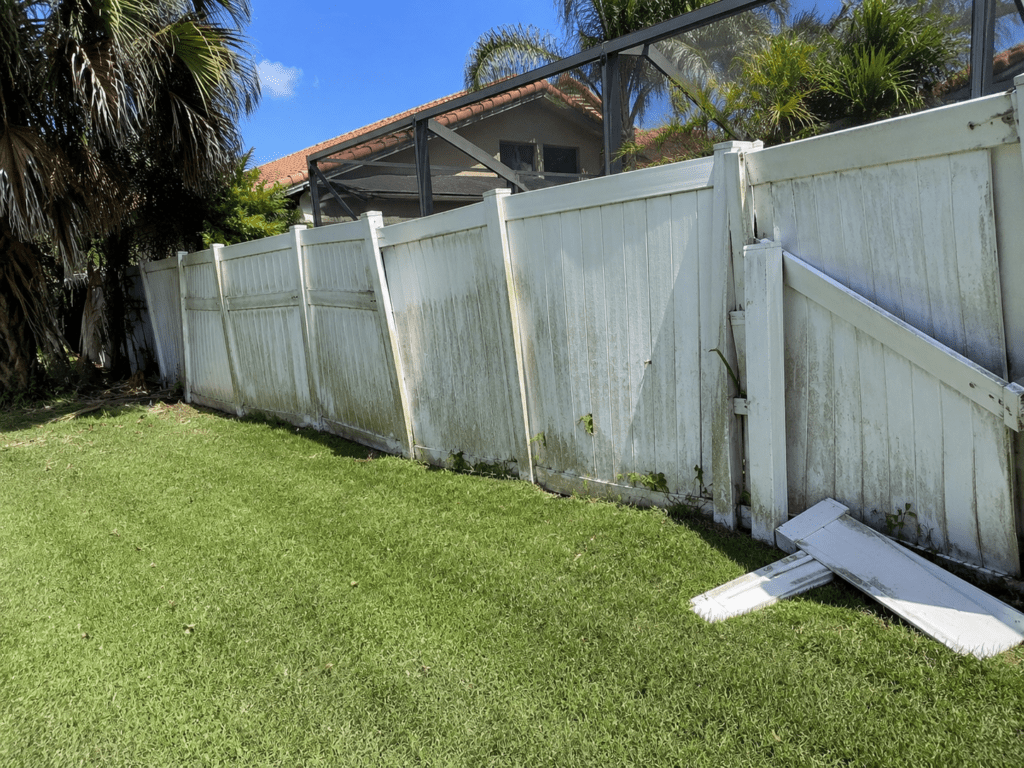
- Rotted rails or pickets. Wood rot is the most common issue in Florida’s humidity. When the middle sections of boards are soft or crumbling, the whole panel loses structural integrity.
- Missing pickets or sections. Gaps suggest deferred maintenance and give adjusters documentation that the fence was not in good repair prior to any storm event.
- Rust-through on metal fences. Surface rust can be treated. Rust that has eaten through a post or rail is a structural problem and will be noted.
- Non-code-compliant pool barriers. This one is serious. Florida law requires pool enclosures to meet specific height and gap requirements. A fence that doesn’t comply exposes you to liability claims that go well beyond Coverage B.
Some carriers now flag these issues in writing and give homeowners a deadline to remediate. Others note them in the file and use them to justify a lower payout or a coverage exclusion at renewal. Either way, you want to know before they do.
The Cost Math: What You’re Actually Risking
A typical wood fence replacement in the Jacksonville area runs between $3,000 and $8,000 depending on linear footage, material, and site conditions. That’s a real number, and it’s the reason a lot of homeowners put it off.
But set that number against what’s actually at stake.
If a hurricane damages your fence and an adjuster determines it was already in poor condition, the carrier can deny the claim under the neglect exclusion. You absorb the full replacement cost – plus whatever debris removal and emergency repair work was needed after the storm. Now you’re not looking at $5,000 for a planned replacement. You’re looking at $8,000 to $12,000 in post-storm costs with no insurance offset.
Worse, if the fence condition is part of a broader maintenance pattern the carrier documents during an inspection, you may face a non-renewal notice. Re-entering the Florida homeowners insurance market as a non-renewed policyholder means accepting whatever Citizens Property Insurance offers, or paying significantly higher premiums through surplus lines carriers.
The math isn’t complicated. A proactive fence replacement before your renewal date is almost always cheaper than the alternatives.
If you’re weighing materials for a replacement, the durability gap between wood and vinyl matters here too. A pressure-treated wood fence in Florida typically needs meaningful attention every 5 to 7 years – boards warp, posts sink, and rot takes hold faster in the humidity. Vinyl fencing doesn’t rot, won’t absorb moisture, and holds up through repeated storm seasons without the same maintenance cycle. The upfront cost is higher, but you’re not repeating this conversation in five years.
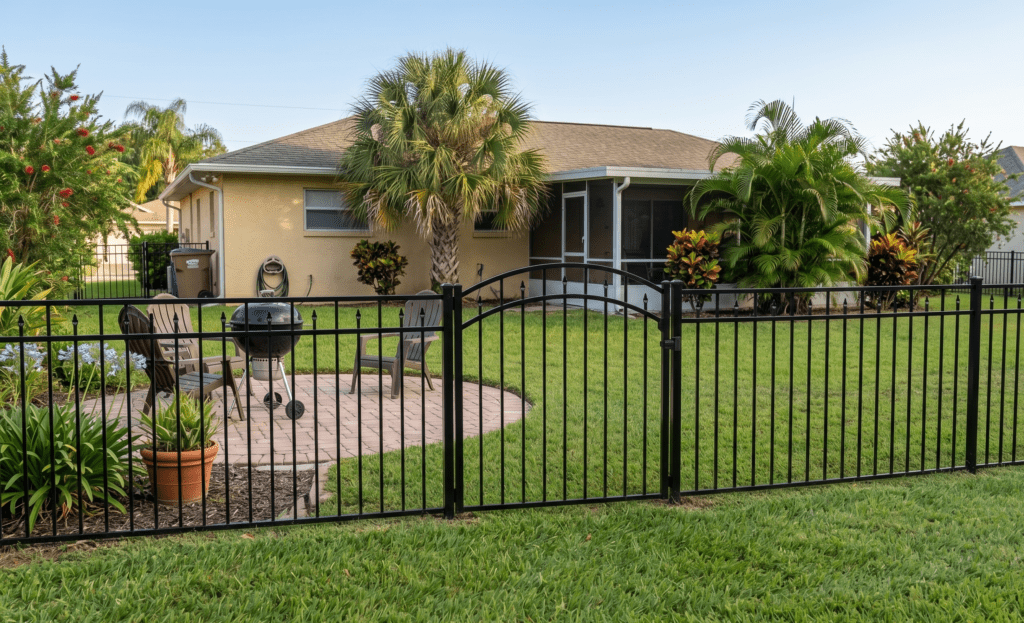
Aluminum fencing is another option worth considering for pool barriers specifically – it doesn’t rust through, it meets Florida code requirements cleanly, and it maintains its structural integrity in high winds better than rotted wood posts will.
Pre-Hurricane-Season Fence Inspection Checklist
Walk your fence line before your renewal date. This doesn’t require any tools or expertise – you’re looking for the same things an adjuster would note.
Posts
- Stand back and sight down the fence line. Any posts that are visibly out of plumb need attention.
- Check the base of each post for soft spots or discoloration – that’s rot starting at the ground line.
- Push on corner and end posts. They should feel solid. Any movement indicates a failing post base.
- Press your thumb firmly against rails at mid-span. Sound wood won’t flex. Rotted wood will feel spongy or compress.
- Look for missing or cracked pickets, especially on panels that take direct sun exposure.
- Check for boards that are pulling away from the rails at the fasteners.
Metal Fencing
- Look for rust that’s pitted or perforated rather than surface-level discoloration.
- Check post bases and bottom rails – ground contact points corrode first.
- On chain link, look for broken links, bent posts, and sections that have lost tension.
Pool Barriers Specifically
- Measure gate latch height: Florida code requires the release mechanism be at least 54 inches from the ground on the pool side.
- Check that gates are self-closing and self-latching.
- Look for any gaps wider than 4 inches in the barrier itself.
Document What You Find. Take photos with your phone and date-stamp them. If you make repairs, photograph the completed work. This creates a maintenance record you can reference if a future claim is questioned.
The Right Time to Replace Is Before You Need To
Waiting for storm damage to replace a failing fence isn’t a savings strategy. In Florida’s current insurance market, it’s a financial risk that most homeowners don’t fully price until they’re dealing with an adjuster who found your pre-storm inspection notes.
Replacing a fence on your schedule, with materials chosen for Florida’s climate, is a different conversation entirely. The team at Fortera Fencing works with Jacksonville homeowners on exactly this: figuring out what’s salvageable, what needs to go, and which materials actually hold up long-term in this humidity and wind environment.
If your renewal is coming up and you’re not sure what condition your fence is in, reach out for a consultation before your carrier’s inspector tells you first.
Call to Schedule Your Free Estimate Now
Get started today with a free estimate and experience the professional, easy, and dependable service that sets Fortera Fencing apart.